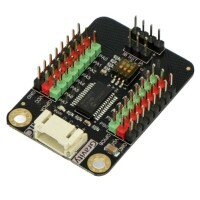


DFRobot Gravity I2C HUB
Brand: Dfrobot
Features


Special Price
₹247
₹442
44% Off
(Inclusive of all taxes)
All orders placed before cut-off time will be dispatched same day.
For B2B orders, contact us on davesh.sharma@jiwebtech.com /
Stock: Outofstock
About this item
The DFRobot Gravity I2C HUB is a versatile and convenient expansion module designed to simplify the wiring and connection of multiple I2C devices in your projects. The I2C bus protocol allows multiple devices to share the same two-wire bus, but connecting several sensors or modules often results in complex wiring and potential signal interference. The Gravity I2C HUB solves these challenges by providing four separate I2C ports, each with dedicated SDA and SCL lines, allowing multiple devices to connect easily and cleanly. This breakout board supports standard 3.3V or 5V logic levels, making it compatible with a wide range of microcontrollers such as Arduino, Raspberry Pi, ESP32, and others. The HUB ensures stable communication by buffering the I2C signals and reducing noise, thus improving reliability in complex sensor networks. The compact design and plug-and-play Gravity connectors make installation quick and foolproof, especially for rapid prototyping or educational purposes. This HUB is ideal for applications requiring multiple sensors or peripherals such as environmental monitoring, robotics, or smart home systems. By simplifying multi-device I2C setups, the DFRobot Gravity I2C HUB saves time, reduces wiring errors, and helps maintain a clean and organized project layout.Specifications
| Number of I2C Ports | 4 independent I2C output ports |
|---|---|
| Operating Voltage | 3.3V to 5V compatible |
| Logic Level | Supports both 3.3V and 5V logic |
| Bus Type | I2C communication protocol |
| Connectors | Gravity standard 4-pin connectors (VCC, GND, SDA, SCL) |
| Signal Buffering | Built-in buffer for stable I2C communication |
| Dimensions | Compact and lightweight design for easy integration |
| Compatibility | Compatible with Arduino, Raspberry Pi, ESP32, and other microcontrollers |
Ratings & Reviews
Similar Products
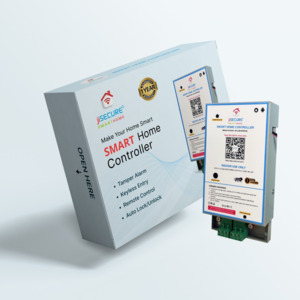
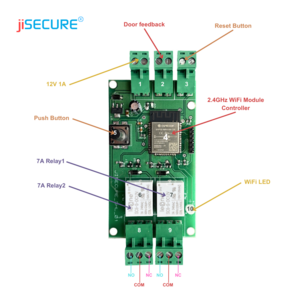
jiSECURE Smart Switch Board – Intelligent Home and Office Control Panel
₹2,500
₹6,798
63% Off
Add
to Cart
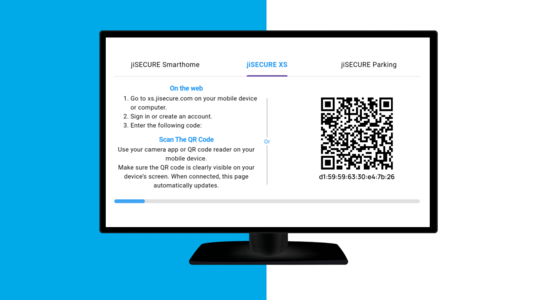
Smart Display TV App – Advanced Connectivity and Control
₹12,346
₹19,908
38% Off
Add
to Cart
Smart Parking Solution – Intelligent Space Detection and Guidance
₹9,000
₹14,653
39% Off
Add
to Cart